Introduction
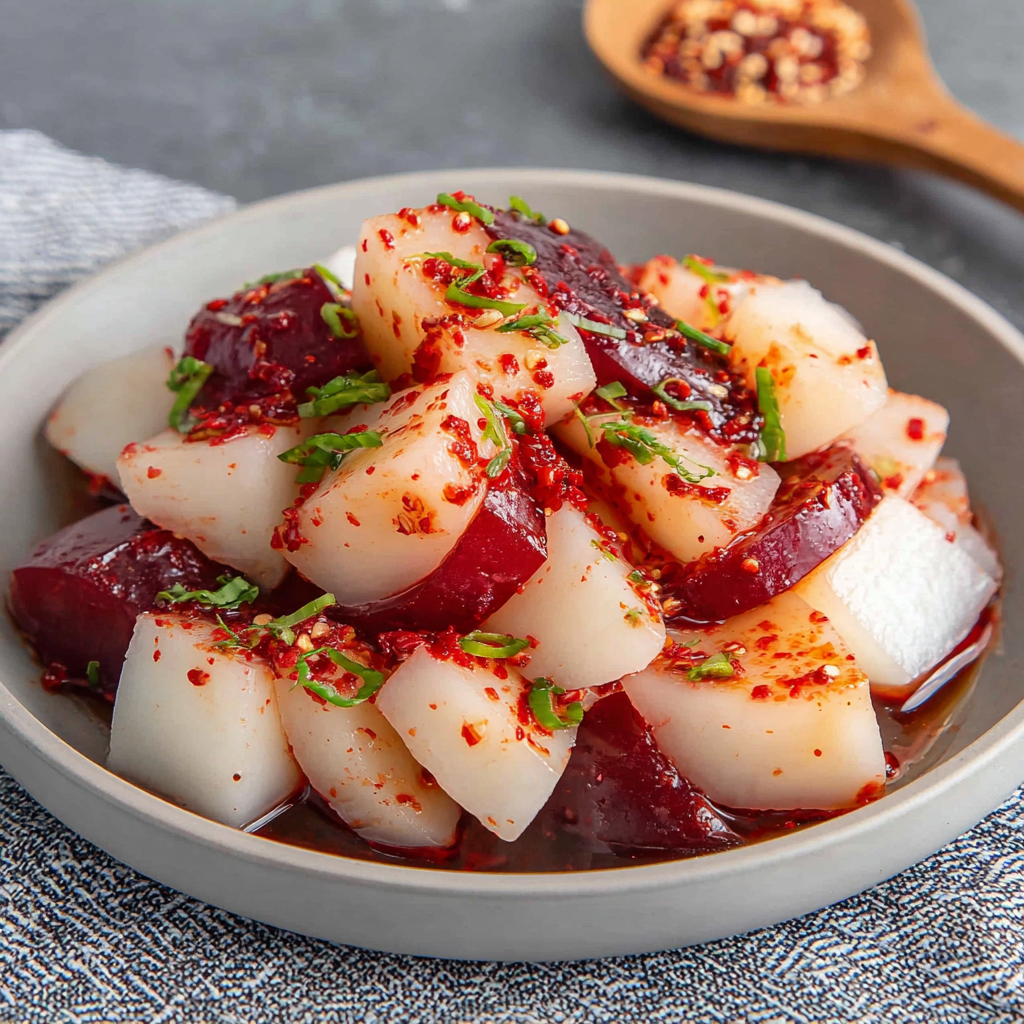
Korean pickled radish, known as 'Danmuji', is a vibrant and tangy side dish that perfectly complements various Korean meals, including Bibimbap and Kimbap. These golden yellow radish slices are not only delicious but also incredibly simple to prepare at home.
The flavors of this dish evolve as the radish absorbs the pickling brine, making it a wonderful addition to any table. Whether you're capturing the essence of Korean cuisine or simply looking for a crisp, refreshing bite, this recipe is sure to delight.
Ingredients
- 2 large Korean radishes (also called Mu)
Korean radishes are thicker and crunchier than regular radishes, providing a satisfying texture. Their natural sweetness balances the acidity of the pickling brine. - 1 cup rice vinegar
Rice vinegar contributes a mild, slightly sweet acidity that is essential for balancing the flavors in the pickling process. - 1 cup water
Water helps to dilute the vinegar, ensuring the pickling solution is not too sharp. It also aids in the extraction of the radish's flavors. - 1/2 cup sugar
Sugar is crucial for achieving the characteristic sweet and tangy profile of Danmuji. It also enhances the overall texture of the pickles. - 1 tablespoon salt
Salt is integral to the pickling process, helping to draw out moisture from the radish and enhancing its crunchiness. - 1 tablespoon turmeric powder
Turmeric gives the pickles their bright yellow color and imparts a mild earthy flavor that complements the dish beautifully.
Directions & Preparation
Step 1: Prepare the radish by cutting it into thin strips or discs.
Cutting the radish into uniform pieces ensures even pickling and a consistent crunch. Aim for slices that are about 1/4-inch thick to allow for just the right amount of texture.
Step 2: In a mixing bowl, combine the rice vinegar, water, sugar, salt, and turmeric.
Whisking these ingredients together dissolves the sugar and salt, creating a harmonious brine. The turmeric will disperse, giving the liquid a vibrant color that will seep into the radish.
Step 3: Place the radish pieces into a clean glass jar, packing them tightly.
Tightly packing the radish helps them stay submerged in the brine, promoting even pickle absorption while preventing air pockets that could spoil the dish.
Step 4: Pour the prepared brine over the radish, ensuring they are fully covered.
Covering the radish entirely with the brine is crucial for proper pickling. If necessary, use a weight or a small plate to keep the radish submerged.
Step 5: Seal the jar and refrigerate for at least 24 hours before serving.
Refrigeration allows the radish to marinate and absorb the flavors of the brine. Ideally, allow for a few days to enhance the taste even more, as the flavors deepen with time.

Choosing the Right Radish
Selecting the best Korean radish is key to making Danmuji. Look for firm and heavy radishes without blemishes for the best crunch and sweetness. Their relative size allows for denser flavor absorption, making every bite rich and satisfying.
Variations to the Classic Recipe
While the traditional recipe offers a balanced flavor, consider adding ingredients like sliced chili peppers for heat or sesame seeds for extra nuttiness. Each variation introduces new dimensions to the dish, allowing for personal twists while preserving the essence of Danmuji.
Serving Suggestions
Korean pickled radish is incredibly versatile. Apart from being an accompaniment to rice dishes, it's a fantastic addition to tacos for crunch, or salads for a pop of color and flavor. Its bright yellow hue and refreshing taste make it a delightful garnish or side.
FAQs
What should I do if my pickling brine is too sweet?
You can balance the sweetness by adding a bit more vinegar to the brine. Start with a teaspoon, adjust to taste, and mix well.
Why did my pickles come out too soft?
If the radishes were overcooked before pickling or not packed tightly, they might lose their crunch. Always ensure firm, fresh radishes and pack them well.
Can I adjust the quantity of the ingredients for smaller batches?
Absolutely, simply scale down the quantities while maintaining the same ratios to achieve the right balance of flavors.
What if my pickled radish slices turned out too thick?
If your slices are thick, they may take longer to absorb the flavors. Consider slicing them thinner next time or letting them pickle for additional time.
How can I enhance the flavor if it tastes bland?
Enhancement could involve increasing the salt or sugar content based on preference. Tasting the brine before adding to the radish can also help adjust flavors.
Can I substitute rice vinegar with other types?
Yes, while rice vinegar is preferred for its mildness, you can use apple cider vinegar for a different taste, but be mindful of the flavor intensity.
Conclusion
Korean pickled radish stands as a testament to the art of pickling, combining simplicity with a flavor punch that brightens any dish. Its crunchy texture and vibrant color not only elevate the aesthetics of your meals but also harmonize with various flavors.
Embrace the joy of making your own Danmuji at home, allowing for creativity and personal flair in every batch. Each bite is a delicious reminder of the beauty of homemade traditions.
Recipe Card
Crafting the Perfect Korean Pickled Radish
Ingredients
- 2 large Korean radishes also called Mu
- 1 cup rice vinegar
- 1 cup water
- 1/2 cup sugar
- 1 tablespoon salt
- 1 tablespoon turmeric powder
Instructions
- Prepare the radish by cutting it into thin strips or discs.
- In a mixing bowl, combine the rice vinegar, water, sugar, salt, and turmeric.
- Place the radish pieces into a clean glass jar, packing them tightly.
- Pour the prepared brine over the radish, ensuring they are fully covered.
- Seal the jar and refrigerate for at least 24 hours before serving.
Notes
Additional serving suggestions: pair with a crisp salad, garlic bread, or roasted seasonal vegetables for balance.
For make-ahead, prep components separately and assemble just before heating to preserve texture.
Taste and adjust with acid (lemon/vinegar) and salt right at the end to wake up flavors.