Introduction
Korean Pot Roast is a delightful fusion of tender meat and rich, bold flavors, perfect for a comforting dinner. This dish marries traditional Korean ingredients with the classic pot roast technique, resulting in a meal that is as satisfying as it is unique. As you cook this dish, the aroma will fill your kitchen, drawing everyone in and making mealtime something to anticipate.
The key to a great Korean pot roast lies in the marinade and the quality of the ingredients. By selecting premium beef and letting it absorb the flavors of soy sauce, sesame oil, and garlic, you create a tender, juicy roast that captures the essence of Korean cuisine. Serve it with rice or noodles for a complete meal that brings warmth and happiness to your dining table.
Ingredients
- 3 lbs beef chuck roast
Beef chuck is ideal for pot roasting due to its rich marbling, which melts down during cooking, creating a moist and flavorful dish. - 1 cup soy sauce
Soy sauce adds umami and depth to the dish, enhancing the savory notes of the beef while also contributing to its rich color. - 1/4 cup sesame oil
Sesame oil brings nuttiness and aromatic qualities, which balance the flavors in the roast and add a hint of authenticity. - 6 cloves garlic, minced
Garlic provides a robust flavor that infuses the beef as it cooks, enhancing the overall taste with its aromatic qualities. - 1/2 cup brown sugar
Brown sugar introduces sweetness to counterbalance the saltiness of soy sauce and helps build a beautiful caramelization on the meat. - 1 inch ginger, thinly sliced
Ginger adds a fresh, spicy note that complements the richness of the meat while also aiding in digestion. - 1 onion, sliced
Onion contributes sweetness and depth of flavor, as it cooks down and melds with the other ingredients, enhancing the overall profile. - 2 cups carrots, cut into chunks
Carrots add a touch of sweetness and a lovely texture, providing a contrast to the tender meat in the finished dish. - 2 cups potatoes, quartered
Potatoes soak up the delicious juices from the pot roast, becoming tender while adding heartiness to the meal. - 1 cup beef broth
Beef broth serves as the cooking liquid, adding additional meatiness and moisture, ensuring the roast cooks evenly and stays juicy.
Directions & Preparation
Step 1: Prepare the marinade by mixing soy sauce, sesame oil, minced garlic, brown sugar, and sliced ginger in a bowl.
Mixing the marinade ahead of time ensures that the flavors are well combined. The garlic and ginger will infuse the beef with a strong flavor profile, while the brown sugar helps to create a beautiful glaze during cooking. A good marinade is essential for deepening the overall taste of the pot roast.
Step 2: Place the beef chuck roast in a large resealable bag or bowl and pour the marinade over it. Seal and refrigerate for at least 4 hours, preferably overnight.
Allowing the beef to marinate overnight is crucial for the flavors to penetrate deeply into the meat. The acidity of the marinade tenderizes the beef, making it succulent. For a quick prep, even a few hours can make a difference, but longer is always better.
Step 3: Preheat your oven to 300°F (150°C).
A slow cooking process is essential for pot roasts, as it allows the tough fibers of the meat to break down, resulting in a tender roast. Preheating ensures that when the meat goes in, it immediately begins cooking evenly and thoroughly.
Step 4: In a large Dutch oven, sauté the sliced onions in a bit of oil until they are translucent.
Sautéing onions first brings out their natural sweetness and enhances the base flavor of the dish. This step prepares the foundation for your pot roast, allowing the onions to caramelize slightly and integrate into the final dish.
Step 5: Remove the beef from the marinade (reserve marinade) and sear it in the Dutch oven on all sides until browned.
Searing the beef at this stage develops complex flavors through the Maillard reaction, resulting in a deep, savory crust. This browning enhances the texture and overall richness of the pot roast, setting the stage for a flavorful outcome.
Step 6: Add the reserved marinade, carrots, potatoes, and broth into the Dutch oven. Bring to a simmer.
Adding vegetables and the marinade at this point allows them to absorb the robust flavors as they cook. The liquid will create a luscious sauce, while the vegetables become tender and flavorful, complementing the meat beautifully.
Step 7: Cover the Dutch oven and transfer it to the preheated oven. Cook for 3-4 hours, or until the meat is fork-tender.
The long, slow cooking time is critical for breaking down the collagen in the beef, which transforms it into melt-in-your-mouth deliciousness. Checking the meat for tenderness is key; it should break apart easily when tested with a fork.
Step 8: Once done, remove the pot roast and vegetables from the oven. Let it rest for 15-20 minutes before slicing.
Resting the meat allows the juices to redistribute throughout, ensuring that each slice is moist and flavorful. This step also allows time to prepare any sides or sauces if needed.
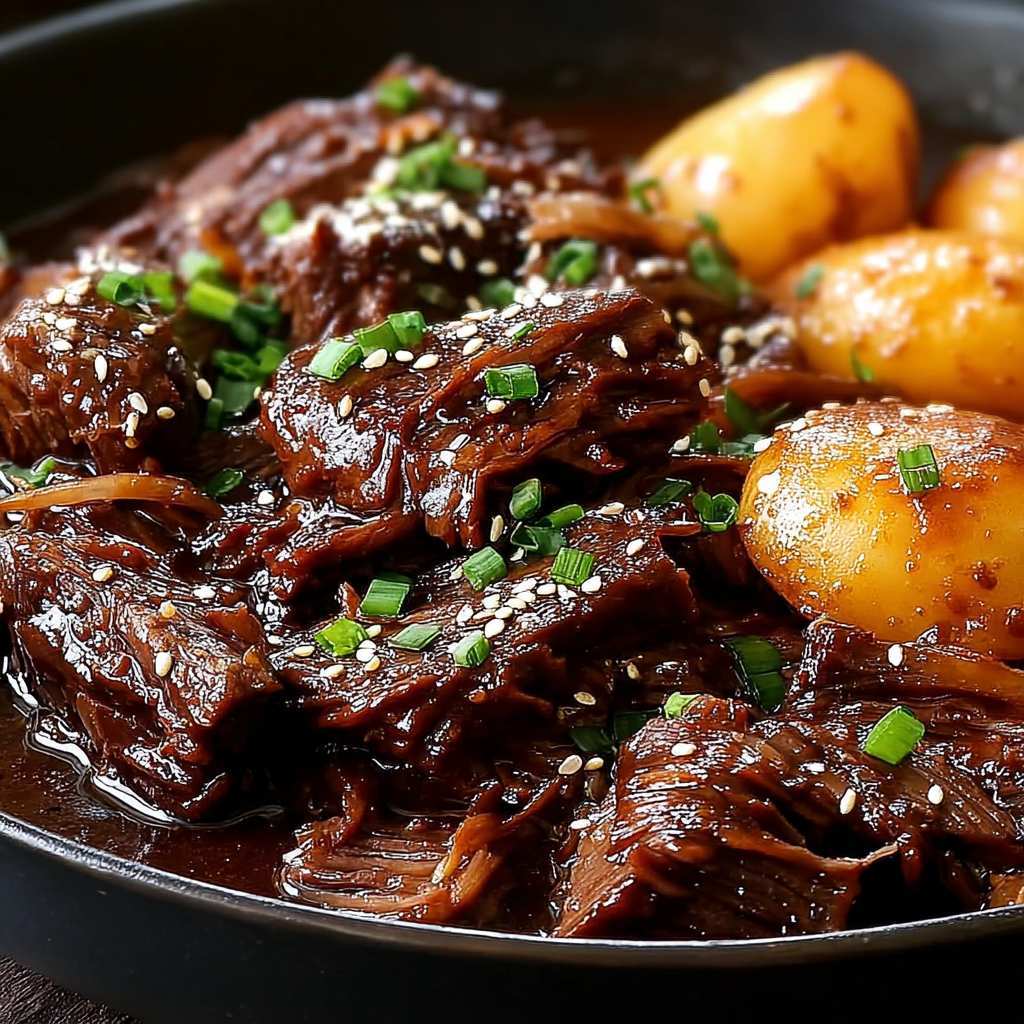
Step 9: Slice the roast against the grain and serve with the carrots, potatoes, and sauce from the pot.
Slicing against the grain helps to ensure that the meat remains tender and easy to chew. Serving it with the vegetables and sauce enhances the meal, creating a harmonious blend of flavors and textures that celebrate the dish.

Elevating Your Marinade for Extra Flavor
Marinades are the heart of any great pot roast, and experimenting with additional flavors can elevate your dish significantly. Consider adding a splash of rice vinegar for acidity or a tablespoon of gochujang for a spicy kick. Incorporating fresh herbs like cilantro or green onions at the end can also provide a vibrant finish, enhancing the overall taste and presentation.
Perfect Pairings for Your Korean Pot Roast
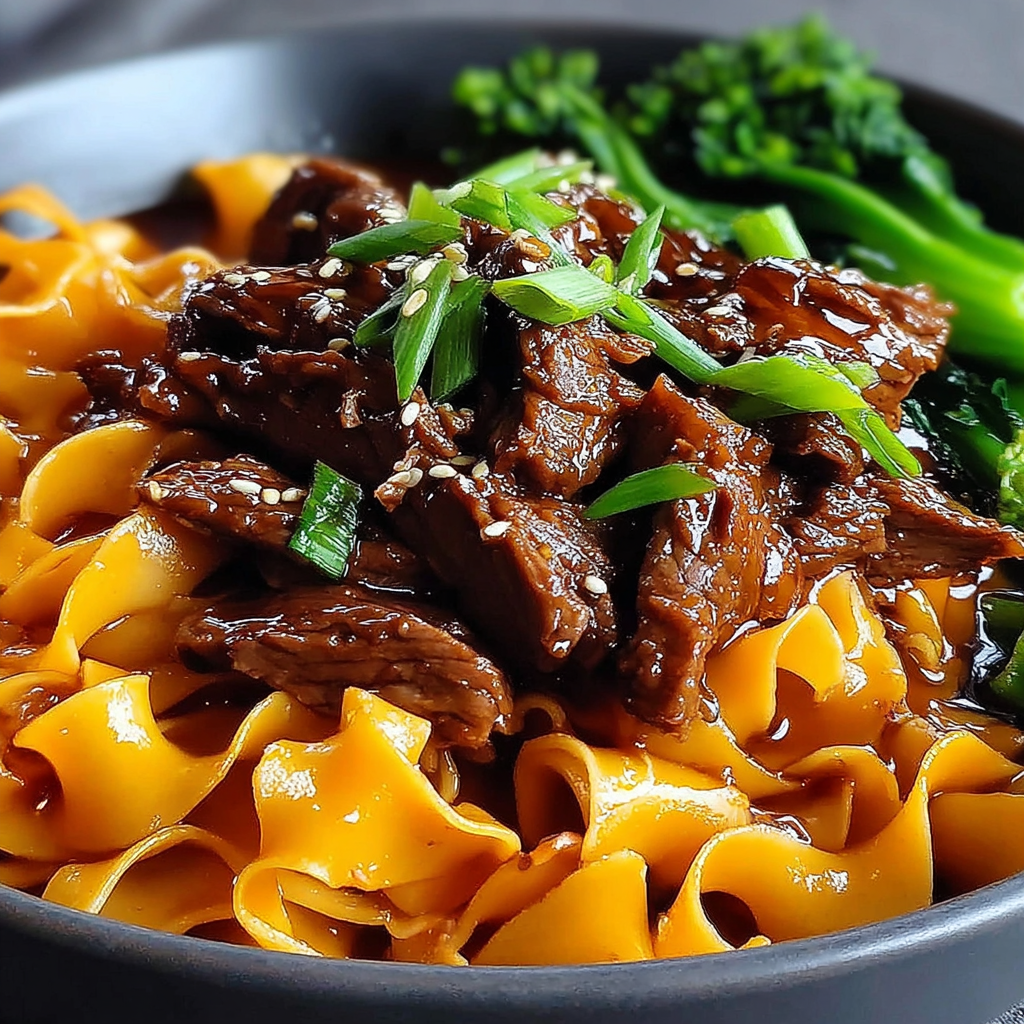
Impress your guests by serving Korean pot roast with traditional sides that complement its rich flavors. Pickled vegetables, known as banchan, add a zesty contrast, while fluffy white rice or chewy noodles absorb the savory sauce. A side of kimchi enhances the meal's umami profile, rounding out the dining experience beautifully and allowing for a wonderful blending of flavors.
Tips for Achieving Tender, Juicy Meat
The key to a truly tender pot roast starts with the initial preparation. Ensure your beef is well-marbled, as this fat will render during cooking, keeping the meat moist. Additionally, allow plenty of time for the roast to cook slowly in the oven—rushing this step will yield tougher meat, while patience results in a melt-in-your-mouth experience. Don’t forget to let the meat rest before slicing for ultimate juiciness.
FAQs
What if my pot roast ends up too thick or thin?
If your pot roast sauce is too thick, you can thin it down by adding a splash of broth or water. Conversely, if it’s too thin, return it to the stovetop, simmer without a lid to reduce it further.
Can I substitute other cuts of meat for the roast?
Yes, you can use brisket or round steak, but keep in mind that different cuts will impact the texture and flavor due to varying fat content.
How can I enhance the sweetness of the pot roast if it tastes too salty?
If you find your pot roast is too salty, try adding a little extra brown sugar or honey to balance the flavors, or include a splash of vinegar to cut through the saltiness.
Is it possible to add extra vegetables during cooking?
Absolutely! Feel free to add mushrooms, bell peppers, or even zucchini for added texture and flavor; just consider their cooking times to avoid overcooking.
What should I do if the roast becomes overcooked?
If the roast is overcooked, try slicing it thin and serving it with sauce to mask any toughness; thin slices can still be flavorful and enjoyable.
Can I make this dish spicier?
Definitely! Add a bit of gochugaru or red pepper flakes to the marinade for a kick, or serve with a spicy dipping sauce on the side.
Conclusion
Korean Pot Roast is a fantastic way to bring bold flavors to your dining table while enjoying a classic comfort dish. With a few simple steps, you can create a meal that delights both the senses and the soul. The fusion of sweet, savory, and slightly spicy elements makes this dish stand out and is sure to impress family and friends alike.
Don’t hesitate to experiment with variations that suit your taste, and enjoy the process of cooking. The combination of the tender meat and fresh vegetables, all steeped in rich Korean flavors, will leave you craving seconds and perhaps even a third helping!
Recipe Card

Discover the Flavors of Korean Pot Roast at Home
Ingredients
- 3 lbs beef chuck roast
- 1 cup soy sauce
- 1/4 cup sesame oil
- 6 cloves garlic minced
- 1/2 cup brown sugar
- 1 inch ginger thinly sliced
- 1 onion sliced
- 2 cups carrots cut into chunks
- 2 cups potatoes quartered
- 1 cup beef broth
Instructions
- Prepare the marinade by mixing soy sauce, sesame oil, minced garlic, brown sugar, and sliced ginger in a bowl.
- Place the beef chuck roast in a large resealable bag or bowl and pour the marinade over it. Seal and refrigerate for at least 4 hours, preferably overnight.
- Preheat your oven to 300°F (150°C).
- In a large Dutch oven, sauté the sliced onions in a bit of oil until they are translucent.
- Remove the beef from the marinade (reserve marinade) and sear it in the Dutch oven on all sides until browned.
- Add the reserved marinade, carrots, potatoes, and broth into the Dutch oven. Bring to a simmer.
- Cover the Dutch oven and transfer it to the preheated oven. Cook for 3-4 hours, or until the meat is fork-tender.
- Once done, remove the pot roast and vegetables from the oven. Let it rest for 15-20 minutes before slicing.
- Slice the roast against the grain and serve with the carrots, potatoes, and sauce from the pot.
Notes
Additional serving suggestions: pair with a crisp salad, garlic bread, or roasted seasonal vegetables for balance.
For make-ahead, prep components separately and assemble just before heating to preserve texture.
Taste and adjust with acid (lemon/vinegar) and salt right at the end to wake up flavors.