Introduction
There’s something magical about the aroma of slow-roasted lamb wafting through your home. Slow-roasting is a method that allows the meat to become incredibly tender while absorbing all the flavors of fragrant herbs and spices. It’s a cooking technique that rewards patience, resulting in a dish that feels both rustic and refined.
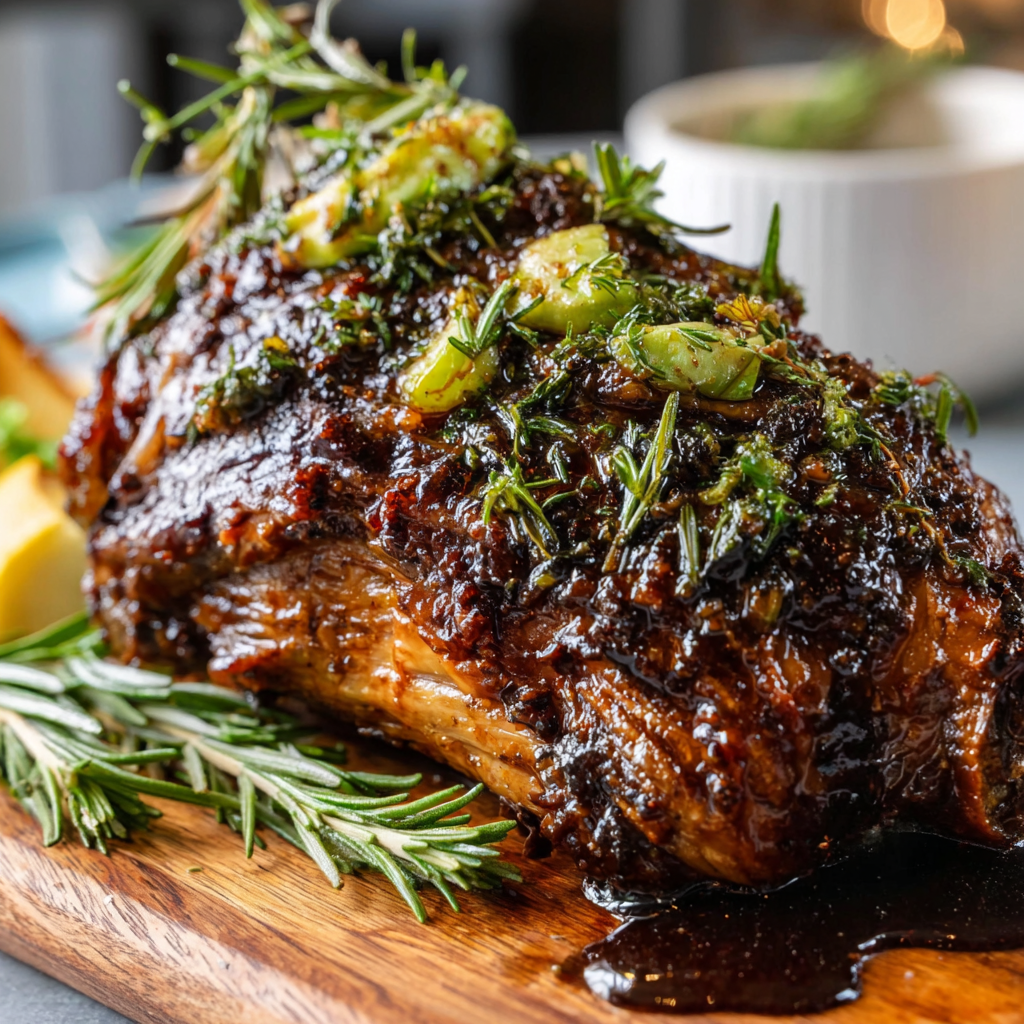
A slow-roasted rosemary lamb shoulder is an ideal choice for gatherings or a comforting family meal. The slow cooking ensures that the lamb becomes melt-in-your-mouth tender, while the rosemary adds a piney note that complements the hearty flavors of the meat. As the shoulder roasts slowly, the natural juices infuse the lamb, creating a succulent dish that’s memorable from the first bite.
Ingredients
- 1 (4-5 lbs) lamb shoulder
Choose a bone-in lamb shoulder for maximum flavor and tenderness. The fat content will help keep the meat moist during the long cooking process and will render out, creating a delicious sauce. - 4 cloves garlic, minced
Garlic not only infuses flavor into the lamb but also enhances the overall aroma of the dish. Roasting mellows the garlic’s sharpness, making it warm and sweet. - 2 tbsp fresh rosemary, chopped
Rosemary has a distinct earthy flavor that pairs beautifully with lamb. Its aromatic oils are released during the slow roasting, permeating the meat and elevating the dish. - 1 tbsp fresh thyme, chopped
Thyme adds a subtle depth to the dish, balancing the flavor of the rosemary. Its slightly minty taste complements the richness of the lamb. - 2 cups chicken or beef broth
Using broth adds moisture and depth to the cooking liquid. It enhances the flavors of the lamb and contributes to a rich sauce. - 1 onion, quartered
Onions will caramelize while roasting, adding sweetness and additional layers of flavor, which enrich the overall dish. - Salt and pepper, to taste
Seasoning is essential in elevating the natural flavors of the lamb. Proper seasoning ensures every bite is flavorful. - 2 tbsp olive oil
Olive oil helps to ensure even cooking and browning, while also adding richness to the dish. It also acts as a base for mixing the herbs.
Directions & Preparation
Step 1: Preheat your oven to 300°F (150°C).
Preheating the oven is crucial for maintaining consistent cooking temperatures, which is especially important for slow-roasting. A lower temperature allows the lamb to cook gently, ensuring it becomes tender without drying out.
Step 2: In a small bowl, mix minced garlic, chopped rosemary, thyme, olive oil, salt, and pepper to form a paste.
Creating this herb paste ensures that the flavors are well combined before being applied to the meat. This step allows the lamb to absorb the herb flavors more effectively during cooking.
Step 3: Rub the herb mixture all over the lamb shoulder, making sure to coat all sides evenly.
Massaging the herb paste into the lamb allows the flavors to penetrate the meat. This step is important for ensuring that every bite is flavorful, turning the lamb into a aromatic dish.
Step 4: Place the lamb in a roasting pan and surround it with quartered onions.
The onions will help flavor the lamb as they roast and will also contribute moisture to the pan, preventing the meat from drying out. The roasted onions can later be used in the sauce for added sweetness.
Step 5: Pour the broth around the lamb, making sure not to wash off the herb mixture.
Adding broth at this point promotes even cooking and prevents the meat from becoming dry. The liquid also collects the drippings, which can be turned into a flavorful sauce later on.
Step 6: Cover the roasting pan tightly with aluminum foil.
Covering with foil helps trap steam, ensuring the lamb remains moist during the long cooking process. This step is key to achieving that fork-tender texture.
Step 7: Roast in the preheated oven for 4 to 5 hours, or until the meat is tender and pulls away from the bone.
The slow-roasting process allows the connective tissues in the lamb to break down into gelatin, which is crucial for tenderness. Cooking time may vary depending on the size of the shoulder.
Step 8: Remove the foil for the last 30 minutes of cooking to allow the lamb to develop a golden crust.
This step is important for developing flavor and texture on the outside of the lamb. The Maillard reaction during this time contributes to a beautiful, flavorful crust.
Step 9: Once done, let the lamb rest for at least 20 minutes before carving.
Resting the meat allows the juices to redistribute, ensuring that every slice remains moist and flavorful. Skipping this step may result in a drier meat when sliced.
Step 10: Slice the lamb shoulder and serve with the roasted onions and pan juices.
Serving the lamb surrounded by its juices not only enhances the presentation but also keeps it beautifully moist. The onions add a sweet contrast to the savory lamb.

The Role of Slow Cooking in Flavor Enhancement
When meat is cooked slowly, the heat breaks down collagen into gelatin, resulting in an exceptionally tender texture. Slow cooking allows flavors to meld beautifully, creating a harmony between the herbs and meat. As the lamb roasts, it absorbs the aromatic qualities of rosemary and thyme, enriching each bite with deep, complex tastes.
Pairings That Complement Warm Lamb Flavors
This dish pairs well with a range of sides that balance its richness, such as creamy mashed potatoes or roasted root vegetables. Fresh salads with tangy vinaigrettes can also provide a pleasing contrast, offering brightness against the savory lamb. A robust red wine, like a Cabernet Sauvignon, enhances the meal's hearty characteristics.
Crafting a Sauce from Roasting Juices
The aromatic liquid left in the roasting pan can be transformed into a delicious sauce that complements the lamb. Skimming off excess fat, reducing the liquid with herbs, and adding a splash of red wine creates a rich, flavorful sauce. This step enhances the overall dining experience, ensuring that every bite of lamb is decadently flavored.
FAQs
What should I do if my lamb is tougher than expected?
If the lamb turns out tougher than anticipated, it might need more cooking time. Return it to the oven for an additional hour, covered, and check periodically until it becomes tender.
Can I use a different cut of lamb for this recipe?
While lamb shoulder is ideal for slow roasting, you can use leg of lamb. Just note that cooking times may vary as leg meat tends to cook quicker.
How can I adjust the herb flavor if needed?
If the herb flavor comes out too strong, consider adding a little water or broth to the pan juices during the last stages of cooking to dilute it slightly, then balance it out with a bit of acidity, such as lemon juice.
What if my broth is overly salty or bland?
If the broth turns out too salty, adding a touch of brown sugar can help balance the flavors. For blandness, increase seasoning with herbs and fresh cracked pepper after tasting.
How can I enhance the crust on the lamb if it isn't browning enough?
If the crust isn’t browning as desired, you can increase the oven temperature to 425°F (220°C) for the last 20-30 minutes. Just be sure to monitor it closely.
Is there a recommended marinating time for the lamb before roasting?
Although marinating isn’t necessary, letting the lamb rest with the herb paste for a few hours or overnight in the refrigerator allows for deeper flavor penetration.
Conclusion
Slow-roasted rosemary lamb shoulder is a dish that embodies comfort and sophistication. It’s perfect for special occasions or a cozy dinner at home, encouraging conversation and connection over a delicious meal.
With thoughtful ingredients and a straightforward approach, this recipe invites home cooks to embrace the joy of slow cooking. The result—a tender, aromatic dish—promises satisfaction in every bite, making it a true culinary achievement.
Recipe Card

Slow-Roasted Rosemary Lamb Shoulder for Home Cooks
Ingredients
- 1 4-5 lbs lamb shoulder
- 4 cloves garlic minced
- 2 tbsp fresh rosemary chopped
- 1 tbsp fresh thyme chopped
- 2 cups chicken or beef broth
- 1 onion quartered
- Salt and pepper to taste
- 2 tbsp olive oil
Instructions
- Preheat your oven to 300°F (150°C).
- In a small bowl, mix minced garlic, chopped rosemary, thyme, olive oil, salt, and pepper to form a paste.
- Rub the herb mixture all over the lamb shoulder, making sure to coat all sides evenly.
- Place the lamb in a roasting pan and surround it with quartered onions.
- Pour the broth around the lamb, making sure not to wash off the herb mixture.
- Cover the roasting pan tightly with aluminum foil.
- Roast in the preheated oven for 4 to 5 hours, or until the meat is tender and pulls away from the bone.
- Remove the foil for the last 30 minutes of cooking to allow the lamb to develop a golden crust.
- Once done, let the lamb rest for at least 20 minutes before carving.
- Slice the lamb shoulder and serve with the roasted onions and pan juices.
Notes
Additional serving suggestions: pair with a crisp salad, garlic bread, or roasted seasonal vegetables for balance.
For make-ahead, prep components separately and assemble just before heating to preserve texture.
Taste and adjust with acid (lemon/vinegar) and salt right at the end to wake up flavors.